
What Are Quartz Sleeves in UV Curing Systems and Why Are They Important?
The Benefits of Quartz Sleeves (Cooling Tubes) in UV Printing and UV Curing Applications
Quartz sleeves, often referred to as cooling tubes, are used in medium-pressure UV curing systems to reduce the amount of infrared (IR) heat reaching the substrate while allowing most of the UV energy required for curing to pass through. This helps prevent overheating, improves process stability, protects heat-sensitive materials and supports consistent curing performance.
They are particularly beneficial in high-power UV curing systems used for label printing, flexible packaging, wood coatings, electronics manufacturing and other applications where heat management is critical.
What Is a Quartz Sleeve in a UV Curing System?
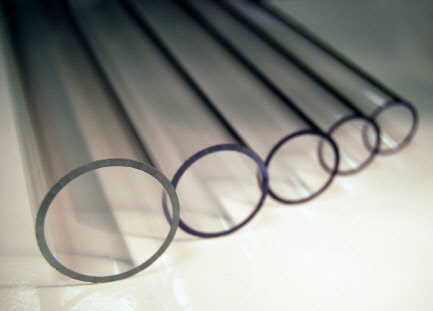 A quartz sleeve is a transparent quartz tube positioned between the UV lamp and the substrate being cured.
In most designs, air or chilled water circulates through or around the sleeve to remove heat generated by the UV lamp. The sleeve acts as a thermal management component, helping to reduce infrared radiation whilst allowing the majority of useful UV wavelengths to reach the curing surface.
Quartz sleeves are designed to filter out infrared (IR) radiation and prevent the system and the substrate from overheating, whilst allowing UV radiation to pass through.
Why Are Quartz Sleeves Important in Medium-Pressure UV Systems?
Medium-pressure UV lamps produce large amounts of ultraviolet energy, but they can also generate heat.
Research and industry sources show that medium-pressure mercury lamps emit energy across ultraviolet, visible and infrared wavelengths, with infrared radiation contributing substantially to heat generation during the curing process.
Without effective heat management, excessive temperatures can affect substrates, coatings and machine components.
What Are the Main Benefits of Using Quartz Sleeves?
1. Reduced Substrate Temperature
The primary benefit of a quartz sleeve is reducing the amount of infrared heat reaching the substrate.
By filtering a significant proportion of IR radiation, quartz sleeves help lower substrate temperatures without substantially affecting UV curing performance.
This allows manufacturers to maintain production efficiency whilst minimising heat-related problems.
2. Improved Processing of Heat-Sensitive Materials
Many modern manufacturing applications use substrates that can be damaged by excessive heat.
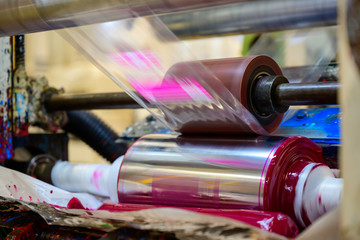 Examples include:
- Plastic films
- Shrink sleeves
- Pressure-sensitive labels
- Flexible packaging
- Thin coated papers
- Flexible electronic materials
Reducing thermal exposure helps minimise the risk of:
- Distortion
- Shrinkage
- Warping
- Curling
- Surface defects
This is one of the main reasons quartz sleeves are widely used in modern UV printing and curing systems.
3. More Consistent Curing Performance
Temperature can influence the behaviour of UV-curable inks, coatings and adhesives. Including factors such as viscosity, wetting, flow characteristics and molecular mobility within UV-curable formulations.
Maintaining more stable thermal conditions can therefore contribute to:
- More consistent curing
- Improved coating appearance
- Better production repeatability
- Reduced process variation
4. Protection of UV System Components
Quartz sleeves do not only protect the substrate.
By reducing thermal exposure, they can also help protect:
- Reflectors
- Rollers
- Conveyor components
- Electrical assemblies
- Web handling equipment
Reducing heat stress can contribute to improved equipment reliability and more stable system operation.
5. Support for High-Power UV Curing
Many industrial UV curing systems operate at high lamp power densities to achieve faster curing speeds and increased productivity.
Industry sources note that water-cooled UV systems provide enhanced thermal management and are particularly suited to high-intensity industrial curing applications.
Quartz sleeves play an important role in these systems by helping control the thermal energy generated by powerful medium-pressure UV lamps.
Which UV Curing Systems Benefit Most from Quartz Sleeves?
Narrow Web Label Printing Systems
Label printing often involves thin films and temperature-sensitive substrates.
Quartz sleeves help control substrate temperatures whilst maintaining the curing performance required for high-speed production.
Flexible Packaging Printing Systems
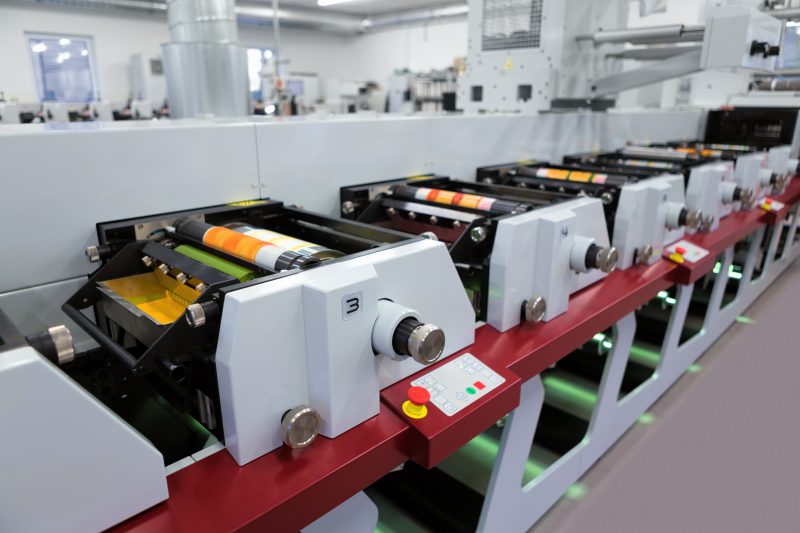 Flexible packaging materials can be particularly vulnerable to heat.
Quartz sleeves help reduce the risk of:
- Film distortion
- Stretching
- Curling
- Registration issues
making them especially valuable in packaging applications.
Wide Web Printing Presses
Wide web presses typically operate at high speeds and use powerful UV curing systems.
The resulting thermal load makes effective heat management essential, particularly during extended production runs.
Wood Coating and Furniture Finishing Lines
Furniture coatings often require multiple UV lamps operating in sequence.
Quartz sleeves help manage surface temperatures and reduce the potential for heat-related defects during curing.
Electronics, PCB and Display Manufacturing
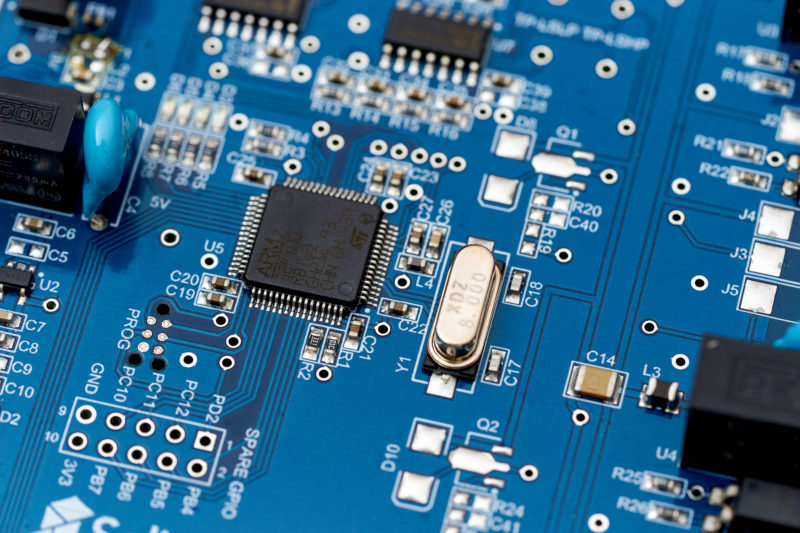
Applications involving printed circuit boards, touchscreens, displays and flexible electronics often require precise dimensional stability.
Reducing unnecessary heat exposure can help maintain product quality and manufacturing consistency.
Are Water-Cooled Quartz Sleeves Better Than Air-Cooled Systems?
The answer depends on the application.
Air-cooled systems are often suitable for lower thermal loads and less demanding curing requirements.
However, water-cooled quartz sleeves generally provide:
- Greater heat removal capability
- More precise temperature control
- Better performance at higher lamp power levels
- Improved protection for heat-sensitive substrates
For high-output medium-pressure UV curing systems, water-cooled quartz sleeves are often the preferred solution.
Frequently Asked Questions
Do quartz sleeves reduce UV output?
Quartz sleeves are designed to allow UV radiation to pass through whilst reducing infrared heat. The exact transmission characteristics depend on the quartz grade, sleeve design and cooling configuration.
Are quartz sleeves only used in printing applications?
No. Quartz sleeves are widely used across UV curing applications including printing, packaging, coating, bonding, electronics manufacturing, wood finishing and industrial processing.
Can quartz sleeves improve product quality?
In many applications, yes. By helping control substrate temperature and maintain more consistent curing conditions, quartz sleeves can contribute to improved process stability and more consistent finished products.
Conclusion
Quartz sleeves, also known as cooling tubes, can bee a critical component in a medium-pressure UV curing system.
Their primary function is to reduce infrared heat while allowing the UV energy required for curing to reach the substrate. This helps protect heat-sensitive materials, improve process stability, support high-power UV operation and maintain consistent product quality.
For manufacturers operating UV printing, coating, bonding or curing equipment, quartz sleeves can play an important role in improving both production performance and process reliability.
If you require Quartz Sleeves for your curing system Alpha-Cure can provide replacement sleeves to your specification. Find out more details in our Accessories page.
Or fill out of Quartz Sleeve specification form and email it to us.
Latest Articles
What Actually Happens Inside a Medium-Pressure UV Lamp?
A medium-pressure UV lamp produces ultraviolet radiation by creating an electrical discharge through...
View ArticleAre Cheap UV Curing Lamps Really Cheaper in the Long Run?
Are Cheap UV Curing Lamps Really Cheaper in the Long Run? Not necessarily. While a cheaper UV lamp m...
View ArticleWhen are UV Lamps Classified as Dangerous Goods? Everything you need to know
Everything You Need to Know About Shipping Mercury UV Lamps Safely You order a UV lamp. It gets pack...
View ArticleFaulty UV Lamp? Here’s How Alpha-Cure Makes the Returns Process Simple and Efficient
When a UV lamp fails unexpectedly, production downtime can be frustrating and costly. At Alpha-Cure,...
View Article