UV Curing in Woodworking: Protecting Production, Quality and Uptime

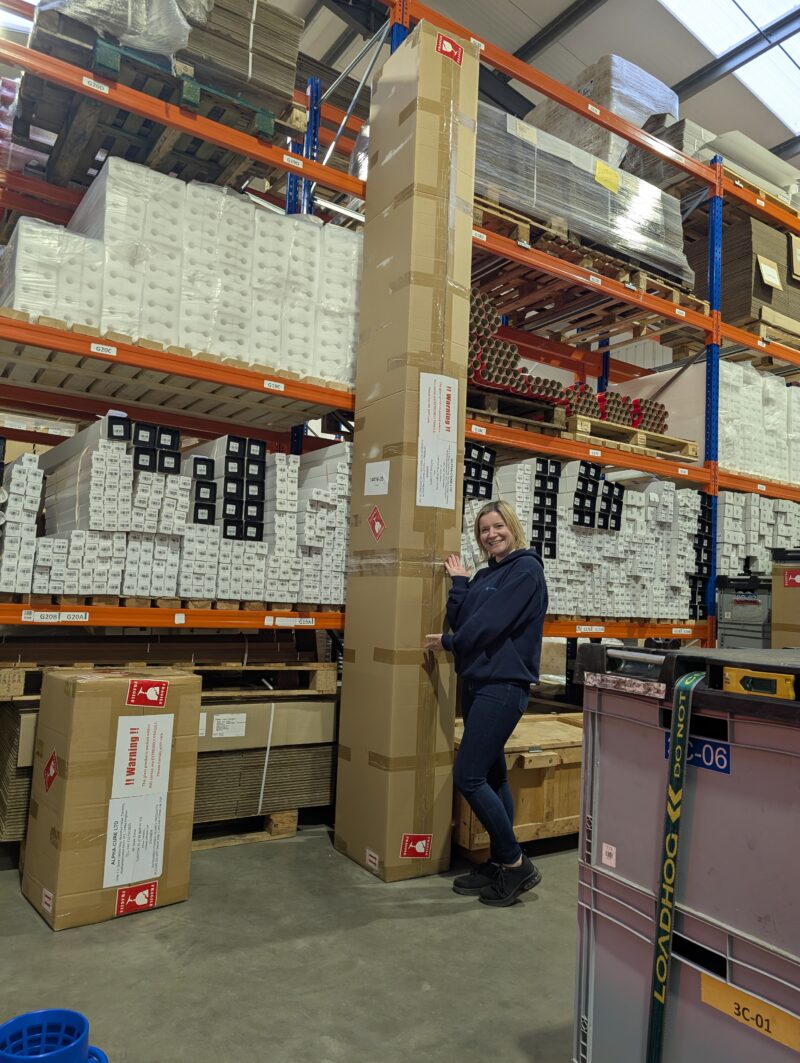
UV Wood Curing Lamp 4metre

We recently produced UV curing lamp that were over 4 metres long for a wood curing business in America. Which reminded us that we have not taken a closer look at the wood curing industry for a while.

So, here we go!

if you are running a modern wood finishing line, UV curing is probably not new to you.

Whether you are producing cabinet doors, flooring panels, decorative boards or high-gloss tabletops, UV has likely been part of your process for years. It is fast, reliable and deeply embedded in industrial woodworking.

So this is not a blog that is making the case for switching to UV. It is a practical recap of why it works so well and why securing the right lamp supply is just as important as the coating itself.

A Quick Look Back: How UV Became the Norm

UV curing moved into woodworking in the 1980s as photoinitiator chemistry improved and automated conveyor systems became more sophisticated.

For flat panels and flooring especially, the advantages were clear:

  • Instant curing instead of extended drying

  • Reduced factory floor space

  • Consistent, repeatable finish quality

  • High scratch and chemical resistance

Today, in many parts of Europe and Asia, UV finishing is simply standard practice for:

  • MDF and HDF panels

  • Kitchen cabinet doors

  • Pre-finished engineered flooring

  • Decorative laminated boards

For most operators reading this, UV is not an experiment. It is a daily production reality.
Why UV Continues to Deliver in Wood Finishing
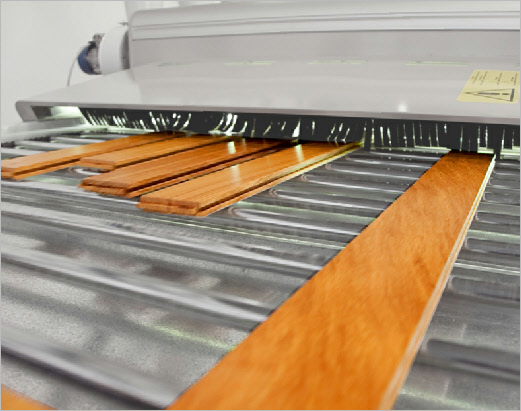
At its core, UV curing remains one of the most controlled finishing methods available.

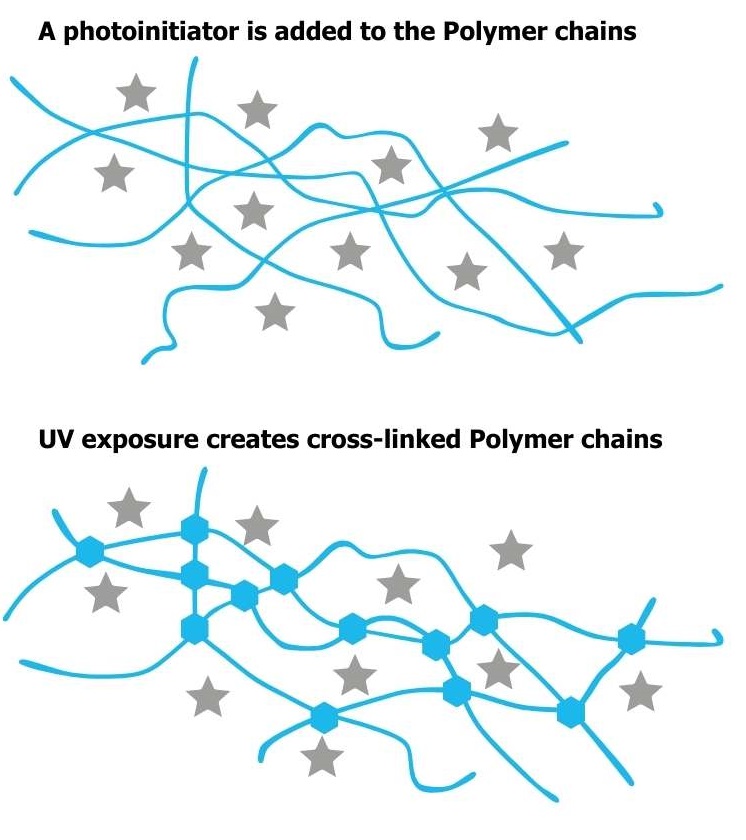
When ultraviolet light hits a properly formulated varnish:

  1. Photoinitiators absorb the UV energy.

  2. A rapid polymerisation reaction begins.

  3. The coating crosslinks into a hard, durable film within seconds.

For operators, that translates to:

  • Immediate handling

  • Faster stacking and packing

  • Predictable cure profiles

  • High abrasion resistance

Medium-pressure UV lamps continue to play a central role because of their broad-spectrum output and strong irradiance levels. They support thicker coatings, pigmented finishes and multi-layer systems commonly used in furniture and flooring production.

The Reality on the Shop Floor

If you operate a UV line, you already know the key pressure points:

  • Production speed cannot slow down

  • Finish quality must remain consistent

  • Downtime is costly

  • Replacement components must be available quickly

In many facilities, the UV lamp is only considered when something goes wrong. Yet lamp performance directly influences:

  • Cure depth

  • Surface hardness

  • Gloss consistency

  • Adhesion between layers

A lamp can still appear bright while its effective UV output has dropped below optimal curing levels.

That is where preventative thinking becomes important.

UV Wood Curing System

When Should UV Lamps Be Replaced?


Most medium-pressure UV lamps experience gradual output degradation over time.

Warning signs often include:

  • Slight increases in cure time

  • Surface tackiness on thicker coatings

  • Variations in gloss across panel width

  • Reduced scratch resistance

  • Higher energy settings required to maintain performance

Regular monitoring with test strips or labels provides objective data rather than relying on visual inspection.

A structured replacement schedule protects both product quality and production targets.

Why Holding Stock Lamps Makes Commercial Sense

For many woodworking manufacturers, UV lamps are treated as consumables but not always as critical inventory.

Consider the risk profile:

  • A failed lamp can halt an entire finishing line

  • Lead times can disrupt production planning

  • Emergency sourcing often increases cost

  • Inconsistent replacements can affect cure reliability

Holding controlled stock of the correct lamp specification reduces uncertainty.

It allows you to:

  • Maintain planned maintenance schedules

  • Avoid reactive downtime

  • Protect production continuity

  • Standardise curing performance

In high-volume environments such as flooring and panel production, even a short interruption can have significant knock-on effects across cutting, pressing and packaging operations.

UV Remains a Growing Standard

While many operators have used UV for years, adoption continues to expand globally.

Growth is driven by:

  • Sustainability pressures

  • Reduced solvent emissions

  • Energy efficiency compared with thermal ovens

  • Increasing automation in woodworking

From Germany and Italy to China and the UK, UV curing remains central to modern wood finishing lines.

For established operators, the focus is no longer whether to use UV. It is how to keep the system running at peak performance.

Securing Reliable UV Supply with Alpha-Cure

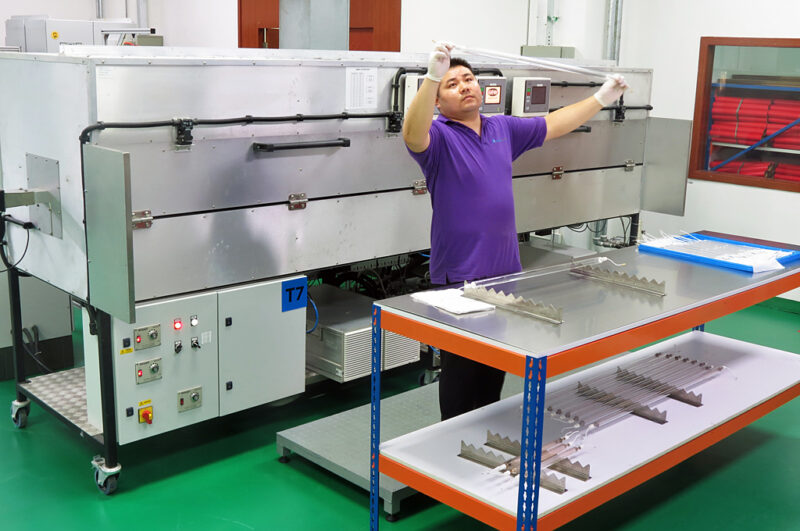
Examining UV Lamp

Alpha-Cure manufactures medium-pressure UV lamps and supplies associated UV technology products for global distribution. With manufacturing facilities in both the UK and China operating to identical ISO 9001 standards, Alpha-Cure supports OEMs and end users with consistent, high-quality UV solutions.

For woodworking operators, this means access to:

Holding the right stock from a dependable manufacturer helps reduce risk, protect finish quality and maintain production uptime.

In a sector where consistency defines reputation, lamp reliability is not a minor detail. It is part of the foundation.

If UV curing is already central to your process, ensuring dependable supply is simply good operational practice.

Need to order your UV lamps or accessories – Contact Us

Sources Used for Blog Information:
RadTech International – Technical resources on UV curing chemistry
IST Metz – Industrial UV curing systems for wood finishing
Heraeus Noblelight – UV applications in furniture and flooring
PPG Industrial Coatings – UV-curable wood coating documentation
European Coatings Journal – Articles on UV coatings in furniture manufacturing
Furniture Production Magazine – Reports on finishing technologies
Journal of Coatings Technology and Research – Photopolymerisation studies